
Whole Breast Ultrasound
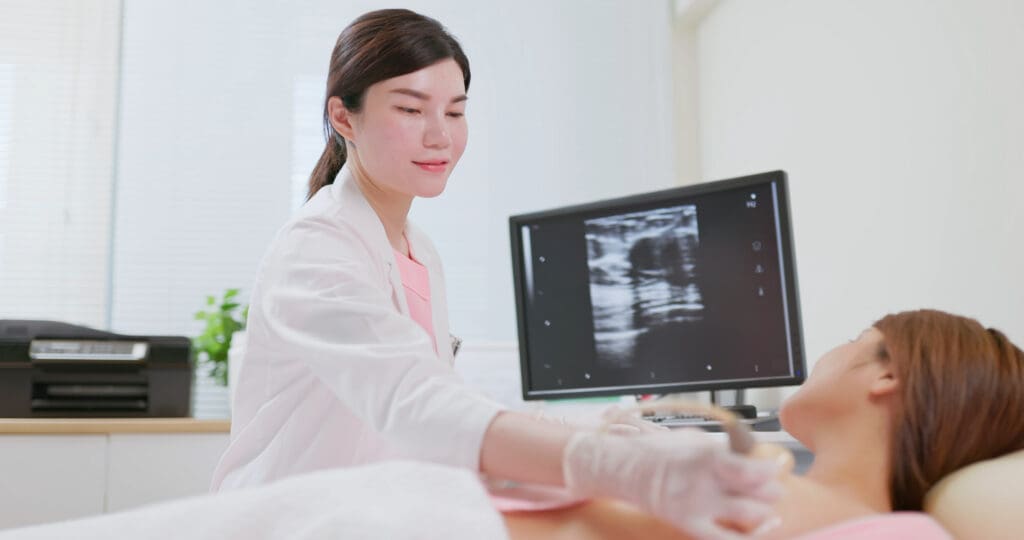
At Onsite Women’s Health, we offer two supplemental screening breast ultrasound solutions designed to support women with dense breast tissue and help practices expand access to comprehensive breast screening services—allowing patients to receive care without ever having to leave your practice:
What is Whole Breast Ultrasound?
Whole Breast Ultrasound provides real-time imaging that can help radiologists further evaluate areas of concern and determine whether a finding is fluid-filled, fatty or a solid mass. Ultrasound may also be used to help guide breast procedures, including biopsies.
Often used as a supplemental breast cancer screening tool following a mammogram, Whole Breast Ultrasound can provide additional information necessary for a more complete evaluation. It is frequently recommended for women with dense breast tissue, as dense tissue can make it more difficult to identify abnormalities on mammography alone.
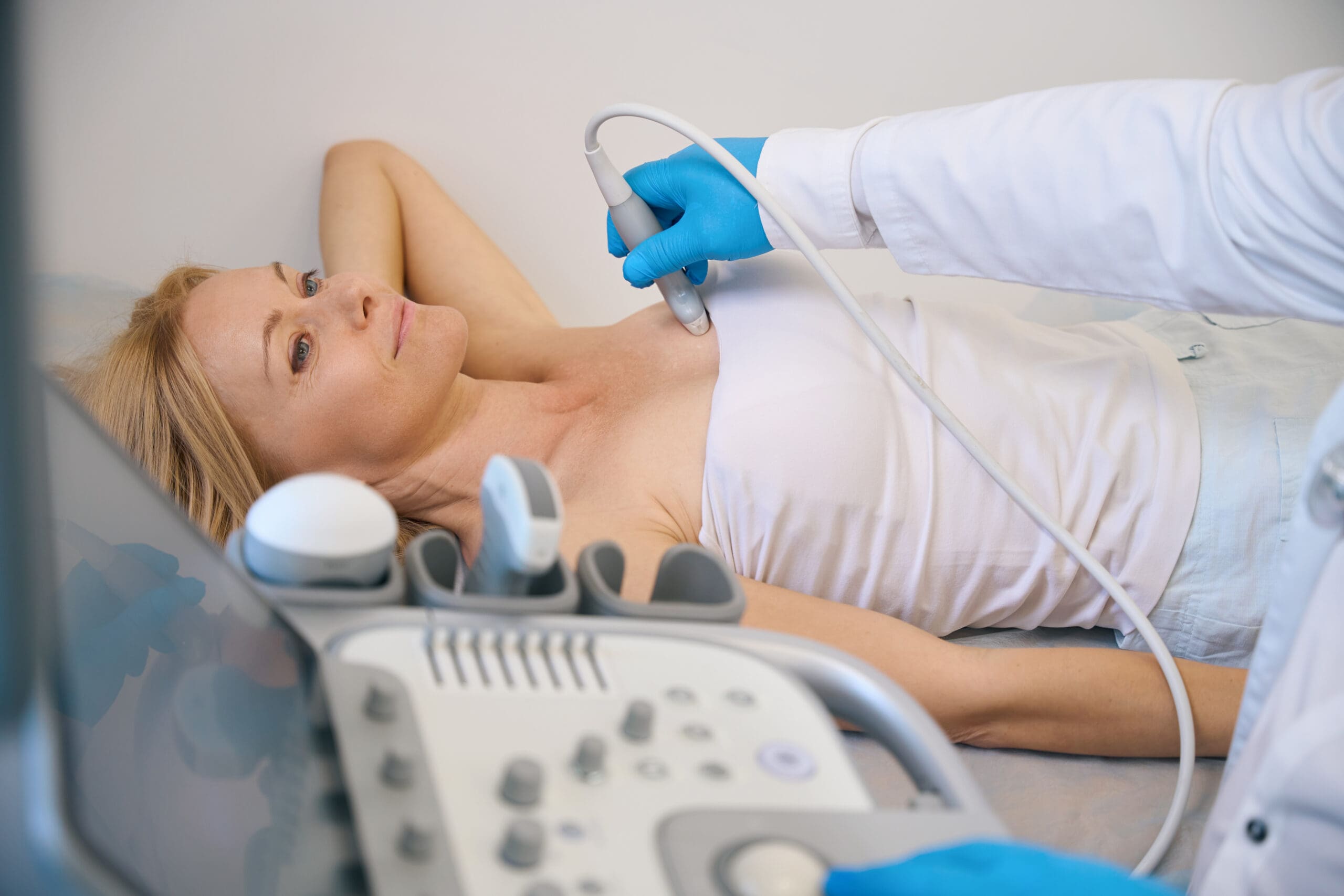
Breast Density Facts

Dense breast tissue affects 40%-50% of U.S. women ages 40-74

Some women with dense breast tissue may need additional imaging to help find cancers

Women with very dense breast tissue are 4-5 times more likely to develop breast cancer



As the relative amount of fibroglandular breast tissue increases, breast density increases. The star symbol on each mammogram gets harder to see as breast density increases-the same is true for a breast cancer.
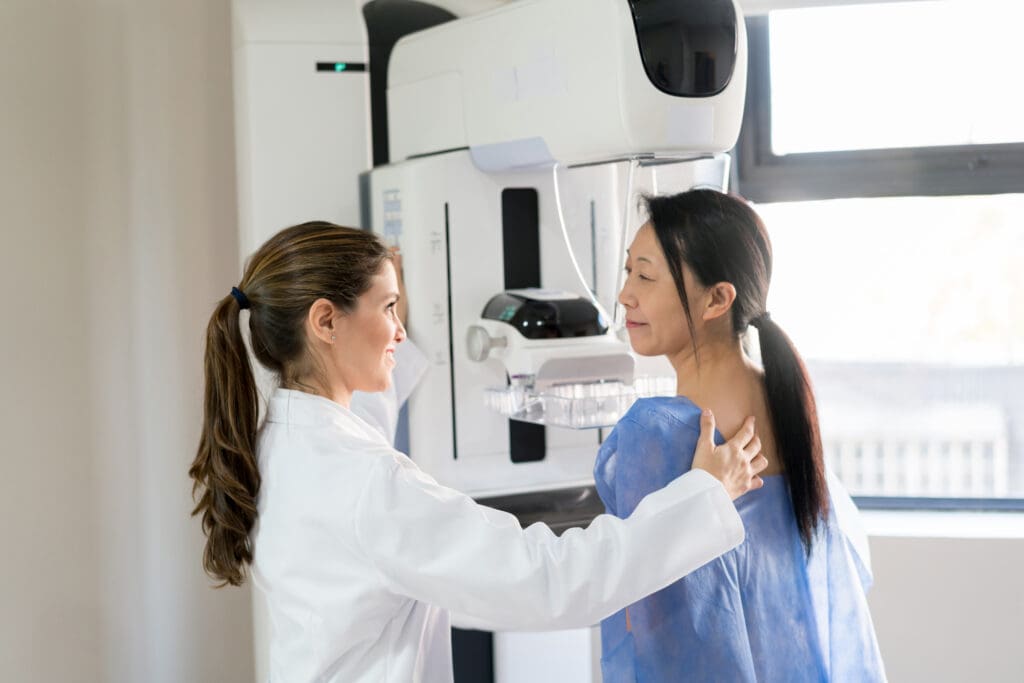
As part of the FDA’s national breast density reporting standard, mammography providers are now required to notify patients if they have dense breast tissue and encourage conversations about whether supplemental screening may be appropriate.
SERVICE
Automated Whole Breast Ultrasound (ABUS)
ABUS uses a specialized system to scan the entire breast automatically. This innovative technology provides 3D breast ultrasound, capturing multiple cross-sectional images that are reconstructed into a three-dimensional view of the breast tissue. This ensures a comprehensive scan of the entire breast.

SERVICE
Handheld Whole Breast Ultrasound (HHUS)
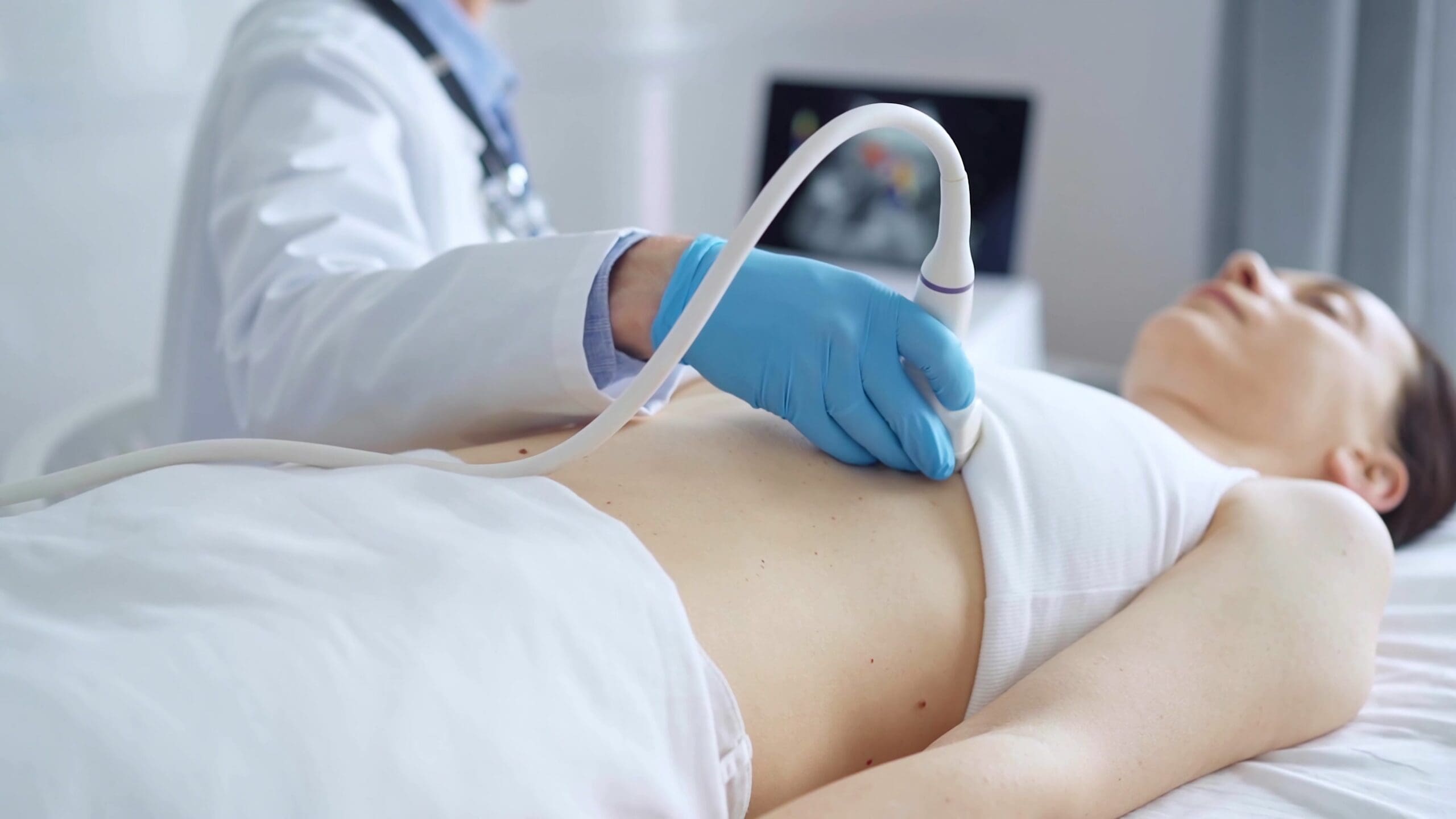
HHUS is performed manually using a handheld ultrasound transducer operated by a physician or qualified provider. This approach allows for real-time image acquisition and direct evaluation during the exam. HHUS may offer additional flexibility for practices supporting both screening and diagnostic breast ultrasound services and is often well-suited for lower-volume settings.
Understanding the Difference: Handheld vs. Automated
Both HHUS and ABUS are clinically appropriate supplemental screening options, but they differ in how images are acquired and incorporated into practice workflows.
|
Category |
Handheld Whole Breast Ultrasound (HHUS) |
Automated Whole Breast Ultrasound (ABUS) |
|
Clinical Use Case |
Flexible, diagnostic or screening use; well-suited for lower volume programs |
Designed for high-volume, standardized screening programs |
|
Operator Dependency |
High, dependent on sonographer expertise |
Lower, standardized acquisition |
|
Who Performs Exam |
Registered sonographer with breast imaging experience required |
Can be performed by trained mammography technologist or trained Breast Imaging Support Specialist |
|
Patient Scheduling Flexibility |
Part Time deployment (e.g., 1 day/week) based on sonographer availability |
Integrated into daily schedule; may utilize shared mammography staffing |
|
Impact on Patient Throughput |
No impact to mammography capacity as a screening exam; may support both screening and diagnostic ultrasound workflows (diagnostic exams may impact screening scheduling) |
May impact mammography capacity when ABUS is performed by shared technologist resources, requiring dedicated scheduling blocks |
|
Equipment |
May be performed with practice’s existing ultrasound equipment (or OWH can procure); may evaluate the addition of diagnostic breast imaging services to maximize staff and equipment utilization |
OWH must procure the ABUS machine |
|
Space Required |
If leveraging practice equipment, can usually be done in existing room |
Separate room required. Should not be added to screening mammography room |
|
Category |
Handheld Whole Breast Ultrasound (HHUS) |
|
Clinical Use Case |
Flexible, diagnostic or screening use; well-suited for lower volume programs |
|
Operator Dependency |
High, dependent on sonographer expertise |
|
Who Performs Exam |
Registered sonographer with breast imaging experience required |
|
Patient Scheduling Flexibility |
Part Time deployment (e.g., 1 day/week) based on sonographer availability |
|
Impact on Patient Throughput |
No impact to mammography capacity as a screening exam; may support both screening and diagnostic ultrasound workflows (diagnostic exams may impact screening scheduling) |
|
Equipment |
May be performed with practice’s existing ultrasound equipment (or OWH can procure); may evaluate the addition of diagnostic breast imaging services to maximize staff and equipment utilization |
|
Space Required |
If leveraging practice equipment, can usually be done in existing room |
|
Category |
Automated Whole Breast Ultrasound (ABUS) |
|
Clinical Use Case |
Designed for high-volume, standardized screening programs |
|
Operator Dependency |
Lower, standardized acquisition |
|
Who Performs Exam |
Can be performed by trained mammography technologist or trained Breast Imaging Support Specialist |
|
Patient Scheduling Flexibility |
Integrated into daily schedule; may utilize shared mammography staffing |
|
Impact on Patient Throughput |
May impact mammography capacity when ABUS is performed by shared technologist resources, requiring dedicated scheduling blocks |
|
Equipment |
OWH must procure the ABUS machine |
|
Space Required |
Separate room required. Should not be added to screening mammography room |
Key Takeaways for Referring Providers

Both modalities are clinically appropriate for supplemental screening in women with dense breast tissue

The primary differentiators are staffing model, operational impact, and scalability

Handheld ultrasound is often more practical for lower-volume practices and can support both screening and diagnostic workflows
ABUS becomes more compelling in higher-volume settings where standardization and scale drive efficiency
Selecting the Right Screening Solution for your Practice
Our team works closely with each partner practice to determine the best-fit approach for delivering high-quality supplemental breast screening services.